The hallway wall as a rail
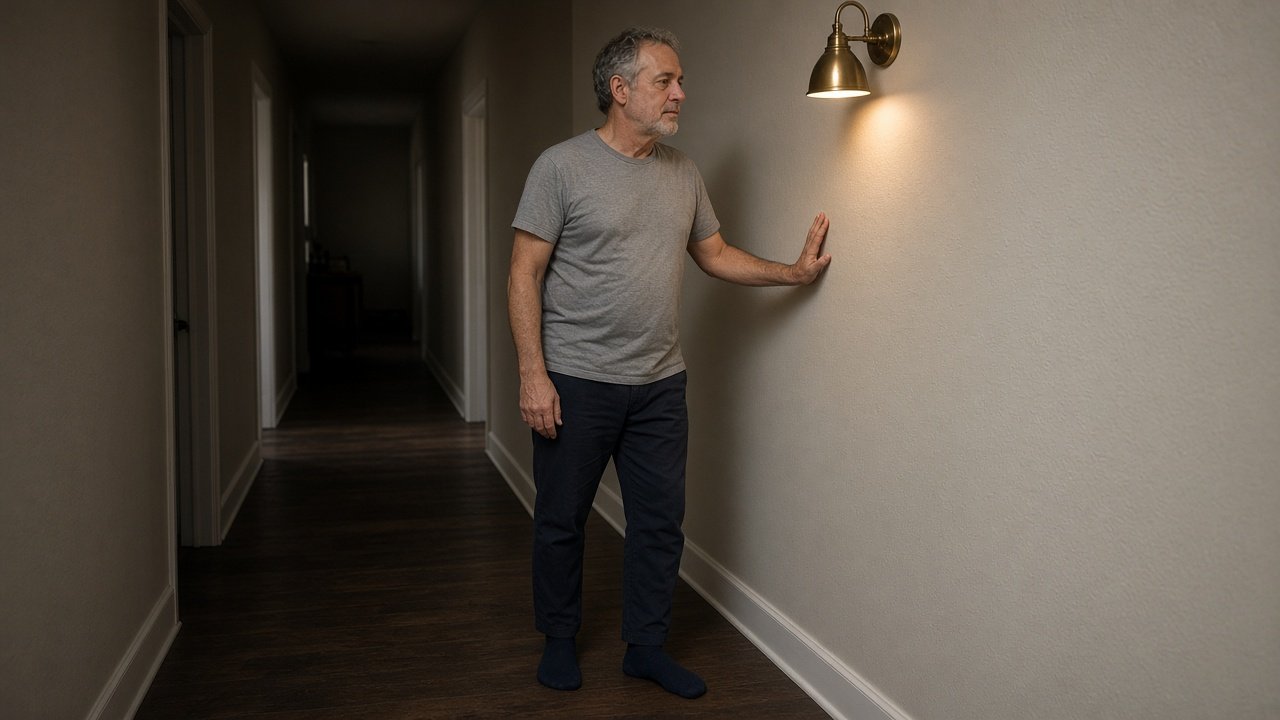
Our hallway is thirty-one feet. I know because I once bought a runner that was thirty and looked like a mistake. The wall on the left, as you walk toward the bedrooms, is the one I use as a rail. Not a barre. A wall. Paint, a sconce, a light switch at hip height that I have learned not to lean on because it clicks off and then the practice becomes a hunt for the switch in sock feet.
A rail is anything you can find without looking down. In a house without a banister on the main floor, the wall is the rail. Stand beside it. Rest the fingers. Stand on two feet until that feels dull, then shift more weight to the outside foot, the one away from the wall. Stay. Breathe. Come back to two feet. That is a minute. Repeat facing the other way so the other foot gets the away position.
My mother used wallpaper. Her hallway had a stripe she could follow with her eyes when the fingers were busy. She was not “doing balance.” She was waiting for the dryer. The waiting was the practice. When we took the wallpaper down in 2018 she put a nail in the stud and hung a small brass hook at elbow height, not to hold a coat, to hold a finger. I thought it was odd. I now have a hook in my own hallway that holds nothing.
If you want a little more, look toward the far bedroom door, then back to the sconce, while the fingers stay on the wall. Turning the head while the feet stay put is how hallways actually work at night. Practice it with the light on first. Night versions belong later, and only if the floor is clear of the dog bowl. The dog bowl is the true opponent of hallway practice.
Socks or bare feet, same rules as the kitchen: no sliding. If the runner is thick, stand on the wood beside it so the ankle has a firm floor. A mushy runner hides the wobble until the wobble is a step. I rolled the last two feet of our runner once for this reason and then left it rolled for a month, which looked like we were about to paint. We were not.
Two minutes is enough. The hallway is also a thoroughfare. If someone needs to pass, let them pass. This is not a class you interrupt. It is a pause you can yield. I do mine while the tea steeps, which is a second timer in my house, the kettle being the first. If you have neither, count thirty breaths and stop. Counting to a hundred is how people get bored and invent lunges, which the hallway did not ask for.
Lunges in a thirty-one-foot hall will meet a doorframe. I have met the doorframe. It left a small mark on the paint and a larger one on my opinion of lunges. Keep the feet mostly under you. The wall is for orientation, not for holding yourself up like a bus strap, though a bus strap is an honorable cousin and I will not insult it.
People with a history of dizzy spells should not treat a hallway page as permission. Sit. Call the person who already knows that history. For the rest of us, a wall, two minutes, eyes on the far door, is a way to keep the night walk to the bathroom from being the only balance practice we get.
What this page will not do is sell a barre or a foam pad. If you want a pad, a folded towel is a pad. If you want a barre, you already have a wall. Paint over the fingerprint later. Or do not. Ours is still there, at the height of a hand that needed it.
Socks or bare feet, same rules as the kitchen: no sliding.
After the Desk is practice notes, not a store. We do not sell a class, a program, or a product. If a sentence here sounds like a pitch, email help@afterthedesk.com.