Hills versus the flat sidewalk
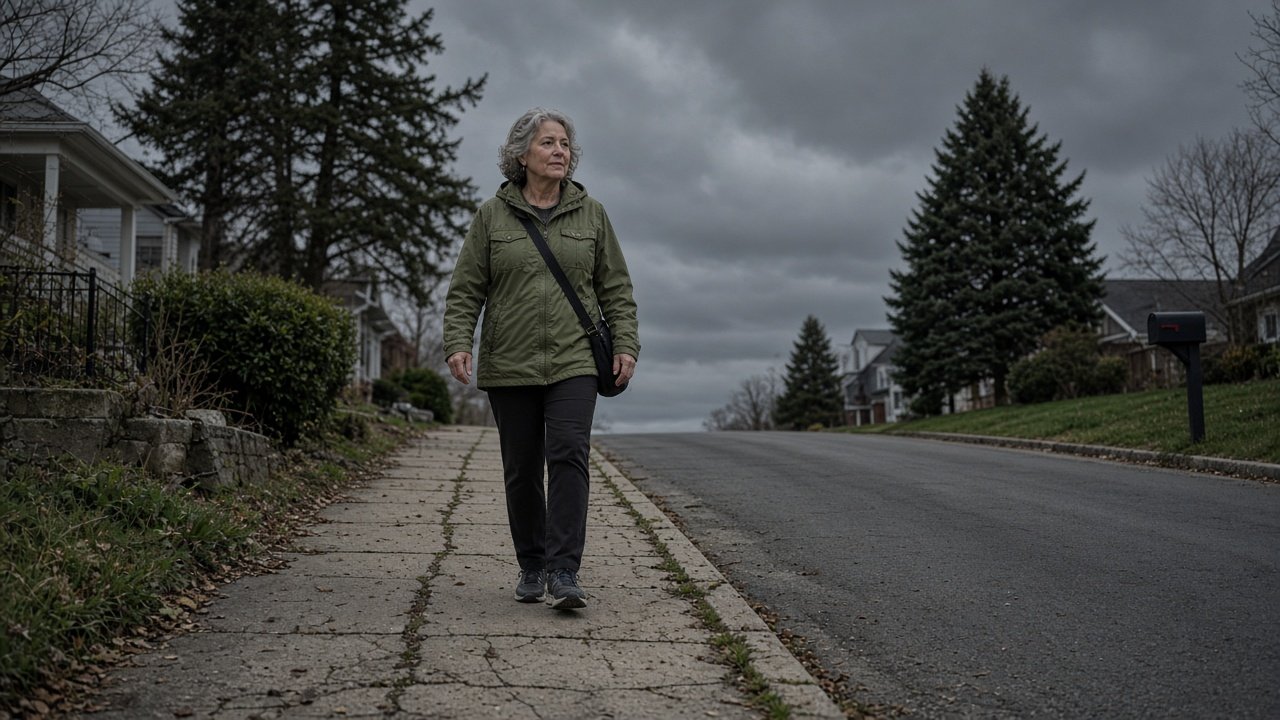
Ruth stopped taking Maple Street in 2019 after she slipped on the last twenty yards, the ones that pitch toward the hardware store. She did not fall. She caught the railing of a porch that was not hers, said sorry to an empty window, and finished the walk on the flat loop behind the school. For six years the hill sat in her week like a closed room. She still walked. She just walked around it.
I live four blocks from that same pitch. On a Tuesday in April I met her at the mailbox and we stood there longer than the mail deserved. She wanted to know whether a hill is “too much” after fifty-five, which is a question with no honest yes. A hill is a different walk. It asks the calves and the breath in a shorter window. It does not ask you to become a different person by Friday.
Start with a hill you already know from a car. That matters more than grade percentage. If you have driven it for twenty years, you already know where the sidewalk crumbles, where the maple root lifts a slab, where a sprinkler soaks the concrete at 7 a.m. Pick a day that is not icy. Pick shoes you have already walked three miles in on the flat. Leave the new pair at home.
Walk the bottom third first. On Maple that is the stretch from the fire hydrant to the green house with the chipped urn. Turn around there. Do that for a week. You are not “building up.” You are letting your feet learn the slant so your eyes can stay on the slabs. People who attack the whole hill on day one tend to look at the crest, which is how they miss the crack that caught Ruth.
Breath will change. That is information, not a verdict. If you can still name the street you are on, you are fine. If you cannot, you slow down or you turn. There is no prize for reaching the hardware store in a particular minute. I have timed Maple at fourteen minutes up and nine down. The numbers are only useful so you know the walk still fits before supper.
Downhill is its own practice. Knees take more of the drop than people expect. Shorten the step. Let the heel meet the slab before you commit the rest of the foot. If a railing exists — a fence, a porch rail that is actually on the public side — you may rest a hand. That is what a rail is for. Use it. This journal is about what you do after the chair, not after a gym.
Ruth returned to Maple in pieces. Hydrant to urn for eight days. Urn to the oak for another week. Then the last pitch, the one she had been avoiding, on a morning after rain when the concrete was dull, not slick. She held the same porch rail she had grabbed in 2019, this time on purpose, for three seconds, and kept going. She still prefers the school loop on windy days. That is not failure. That is a person with two walks.
A hill is not a test of character. It is a slab that tilts. If your town is flat, a parking-garage ramp on a Sunday morning is a cousin of the same idea, used only when the garage is empty and the staff have said you may. Most of us do not need a ramp. We need the street we already live on, walked with the crest out of the center of the eye.
What this page will not do is rank your walk against a younger version of you, or against a neighbor with poles and a watch. Poles are a tool. Watches are a toy. The sidewalk is the work. If Maple is too broken, take the next street. If the next street is also broken, write the city. Then walk the school loop until the slab is fixed.
Breath will change.
After the Desk is practice notes, not a store. We do not sell a class, a program, or a product. If a sentence here sounds like a pitch, email help@afterthedesk.com.