A calf stretch on the garage step
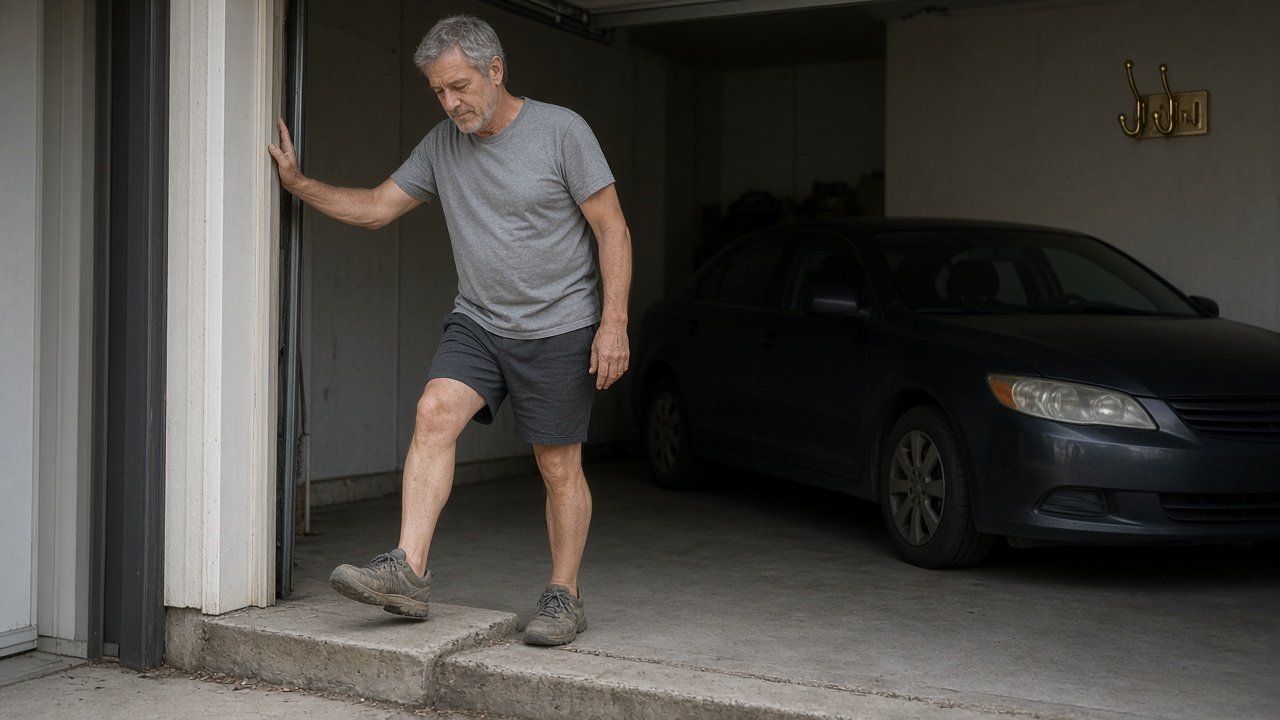
The garage step at our house is four inches. I measured it with a cookbook because the tape was in the junk drawer and the cookbook was on the counter. Four inches is enough. You do not need a slant board. You do not need a wedge with a brand on the side. You need a step you already walk over to take out the trash, and a doorframe you can rest a hand on.
Calves get short when the day is chairs and a car. That is not a diagnosis. It is a description of what sitting does to the back of the lower leg. A short calf makes the first minutes of a walk feel like you forgot how to push off. People then buy a new shoe. Sometimes the shoe helps. Sometimes the step would have been cheaper.
Stand on the threshold facing into the garage or facing out, whichever lets you hold the frame. Place the ball of one foot on the step and drop the heel toward the lower surface. Keep that knee straight for a first stretch. You should feel the pull in the upper calf, not in the back of the knee. If you feel the knee, you have gone too far or the step is too high. Use a thinner board. Or use the curb at the end of the driveway, which is often kinder.
Hold still. Thirty seconds is plenty. Count something boring: the tins of paint on the shelf, the screws in the brass hook. Breathing is not a performance. Switch feet. Then, if the first version felt like nothing, bend the knee a little and drop the heel again. That version talks to a lower part of the calf. Same thirty seconds. Same hand on the frame.
My husband started doing this because he hated the first hill on his loop. He would stretch in the kitchen on a towel and slide. The garage step does not slide. He leaves the overhead door open a foot so the light is decent and the neighbors can see he is not locked in with the sedan. Vanity is not the point. Being visible on a suburban driveway is a kind of safety.
Do not bounce. Bouncing is how people turn a stretch into a small hop and then into a story they tell at supper. Keep the heel heavy. If the stretch becomes a shake, ease off. A shake is the muscle asking for less, not more. Two turns per foot, once in the morning or once after a walk, is a habit. Doing it for twelve minutes because a video looked stern is not a habit. It is a mood.
Shoes on or off? If the step is rough concrete, keep the shoes on. If you have a smooth painted threshold and warm feet, off is fine. Bare heels on icy concrete in March is how you get a different article, one I do not want to write. In our garage the painted strip is wide enough for a shoe and not wide enough for a lecture.
People ask whether this “fixes” plantar something-or-other. I will not use the clinic words. A calf that can drop onto a step often makes the first block of a walk feel less like a negotiation. If you have a foot problem with a name your clinician already gave you, ask that person whether a step stretch belongs in your week. This page is for the rest of us, the ones whose calves are simply tired of the chair.
What this page will not do is sell you a board, a roller, or a night splint. The garage already has a step. Use the frame as a rail. Count the paint tins. Close the door when you are done so the cat does not tour the recycling. Then walk the block if the block is dry.
My husband started doing this because he hated the first hill on his loop.
After the Desk is practice notes, not a store. We do not sell a class, a program, or a product. If a sentence here sounds like a pitch, email help@afterthedesk.com.